
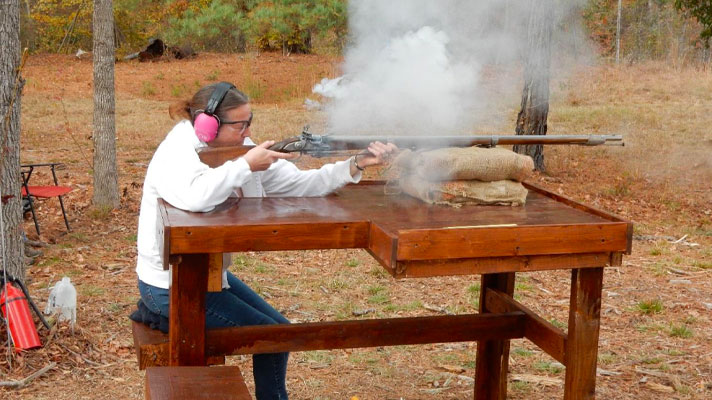
Colonial Era Firearm Bullet Performance: A Live-Fire Experimental Study for Archaeological Interpretation
Revised 2024, Douglas D. Scott, Joel Bohy, Nathan Boor, Charles Haecker, William Rose, and Patrick Severts.
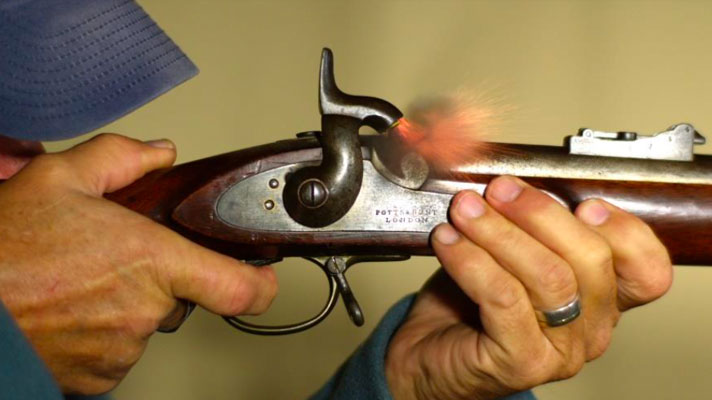
Firearm Bullet Performance: Phase II, Live-Fire Experimental Study for Archaeological Interpretation
Revised 2024, Douglas D. Scott, Joel Bohy, Nathan Boor, Charles Haecker, Peter Bleed, Patrick Severts, and William Lees.
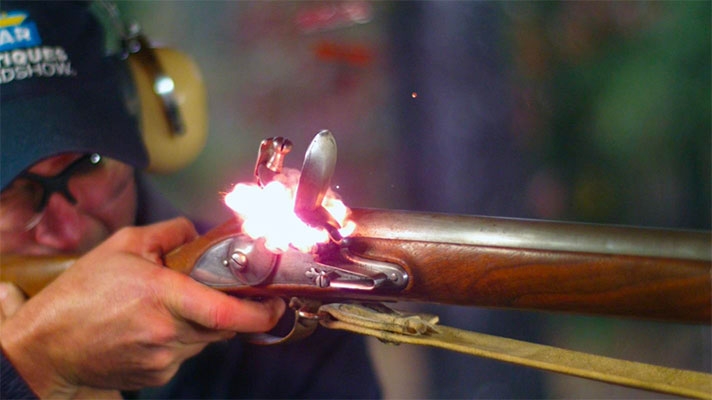
British Pattern 1756 Long Land Musket Bullet Performance: A Live-Fire Experimental Study to Validate Known Bullet-Struck Objects from the First Day of the American Revolution
This live-fire experiment was conducted to determine if we could replicate spherical ball-damaged objects surviving from April 19, 1775, the first day of the American Revolution. The standing structures damaged by gun fire on April 19 now exist amidst a modern built and modified landscape. To better understand the surviving bullet-damaged structures and objects we employed an experimental approach, a live-fire validation study to determine if we could replicate the damage we observed and recorded. Our data exhibits excellent correspondence with other ballistic performance models of Brown Bess muskets, further validating those models and allowing us to compare our data findings with various data sets. The shots fired at replica house walls, interior panels, window shutters, colonial powder horns, and a ballistic gelatin bust very closely duplicated the documented bullet strikes surviving from April 19, 1775. The validation study clearly demonstrates that the British Brown Bess musket had the capability to penetrate various media and cause the damage that is observed in the surviving architectural elements and objects.
An Aide Memoire to Firearms Ignition Identification 1400-1900
2011, S. James Gooding
Jim Gooding (1930-2012) was a major figure in the antique armsworld and played many roles. He was a publisher (of the excellent Canadian Journal of Arms Collecting, later called Arms Collecting, and many books); a tireless researcher; a prolific author; a consultant, both formal and informal; an enthusiastic networker; a mentor; and an authority on and collector of percussion primers, gun locks, and anything to do with ignition systems.
At the time of his death, Jim was researching and writing his major work, a full-length, detailed book about the history of firearms ignition systems and firearms development. He did not complete the task, though he came close, and in the intervening years the book’s fate was uncertain. Now the extensive material he left has been unified and edited in an effort coordinated by his son. ASAC is pleased to provide a home for the book on its website and to make it available to everyone with an interest in antique firearms.
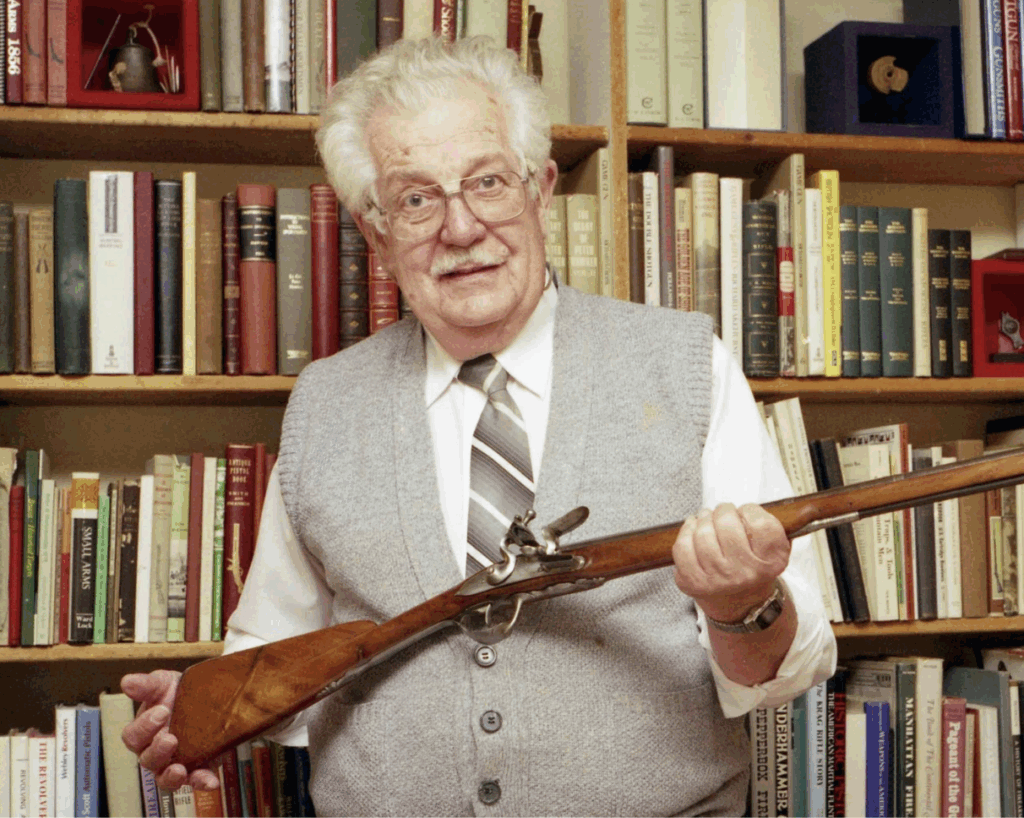
The photo shows Jim with two things of major importance to him: a lock (in this case attached to a gun) and a small portion of his large collection of books.
Jim Gooding's Gun Lock Collection and Catalogue
2026, S. James Gooding
Jim had a vast gun lock collection. When he died in 2012, he left photos he had taken of almost every lock, and a detailed “Gun Lock Collection Catalogue”. He also had a plan to present the collection, with descriptions, as the missing Chapter 14 of his unfinished history of ignition and firearms development, which you can find on this website just above this lock catalogue.
Fortunately, the lock photos included their corresponding gun lock collection catalogue numbers, so three of us (Will Adye-White, Brian Godwin, and Matthew Schneiderman) have combined each pair of photos with its correct description and are able to add this version of Jim’s “Chapter 14” to the ASAC website.
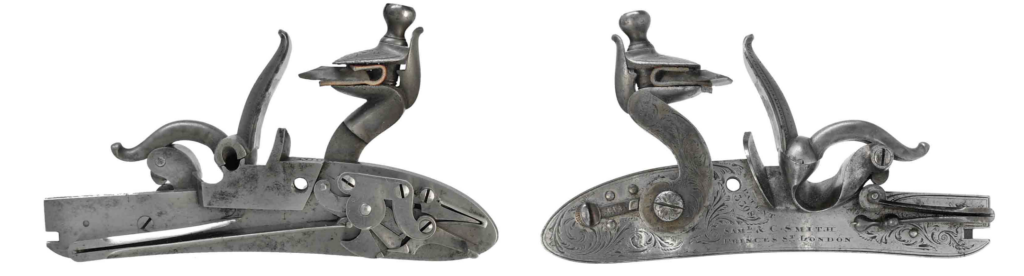
The photo shows lock catalogue #133, William Smith patent flintlock #3398, originally attached to a rifle serial- numbered 4065, from 1828. The lock reads Saml &C. Smith Princes St. London. The patent is #3588, July 28, 1812.
Early Percussion Primer Identification
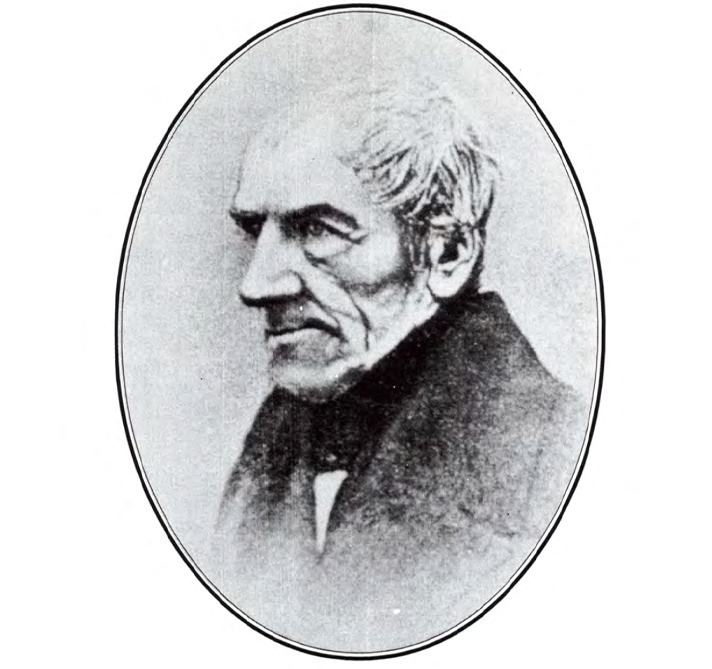
Jim Gooding’s book EARLY PERCUSSION PRIMER IDENTIFICATION is the core literature for the collecting and study of all 19th century percussion primers (many primers shown and discussed in the book are in fact not “early”). Jim initially published and sold this as a perpetual Work in Progress, in a ring binder. Purchasers were “subscribers”, and Jim supplied replacement pages and new pages as his research continued. I doubt there’s a definitive “final edition”, and the PDF made available here on the ASAC website is a proper representation of Jim’s work. Jim published only 54 copies, making the book essentially impossible to find. It now has a home where everyone can read and consult it.
The Survival Files #1:
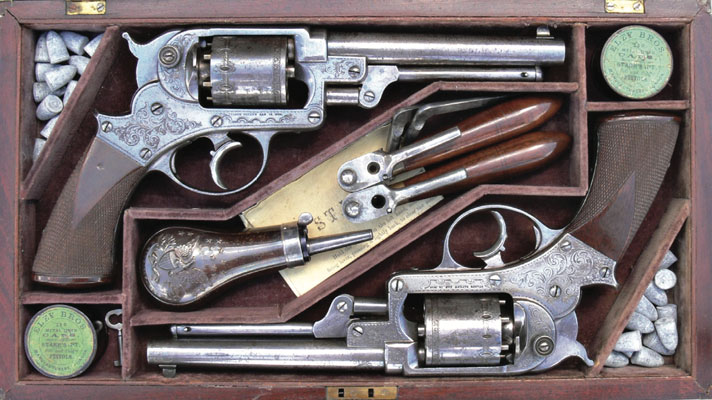
Starr’s Civil War Percussion Revolvers
The Survival Files six-article series analyzes and, for the first time, quantifies the rarity and survival rates of American percussion revolvers. It’s based on the database of British antique arms collector Philip Boulton, who has recorded serial numbers on over 85,000 percussion revolvers since 1970. The Boulton database included dozens of U.S. and British percussion revolver types, collected from U.S., U.K and other international sources. These include museums, auction houses, firearms publications, historical literature, gun catalogues, gun shows, online sales, private collections, and other serial number collectors. These six articles
were first published in The Texas Gun Collector in 2019, 2020, and 2021.
This first entry in the Survival Files series analyzes data on the three models of Starr Civil War-era percussion revolvers. It discusses the history of the guns, refines their previously published production estimates, and quantifies for the first time their known survival rates (KSRs) for both the Civil War and the decades since. These guns had very high rates of Civil War survival at 32% for the Starr Navy and 64% for the two Army models. Current known survival rates, conversely, are low at just 2.9% – 5.4%. The fate of those that survived the Civil War is also addressed.
The Survival Files #2:
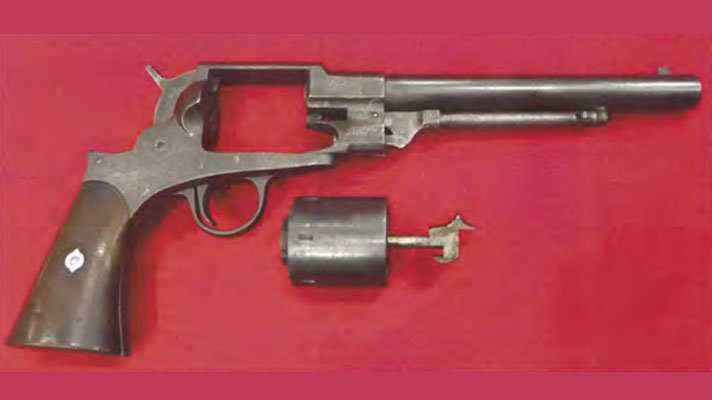
The Freeman, Pettengill and Rogers & Spencer Percussion Revolvers
The Survival Files series analyzes the rarity and survival of American percussion revolvers. It’s based on the database of British antique arms collector Philip Boulton, who has recorded serial numbers on over 85,000 percussion revolvers since 1970. Survival Files #2 analyzes data on three American percussion revolvers—the Freeman, the Pettengill, and the Rogers & Spencer. These guns have deep historical linkages. It discusses the history of the guns, refines their previously published production estimates, quantifies for the first time their current known survival rates (KSRs), and discusses the major factors affecting their survival. It also includes a Note on the Statistics and Serial Number Databases, which addresses the variable pace at which serial numbers have been recorded in the Boulton database, the calculation and value of the Stability Index, and serial number registries.
The Survival Files #3:
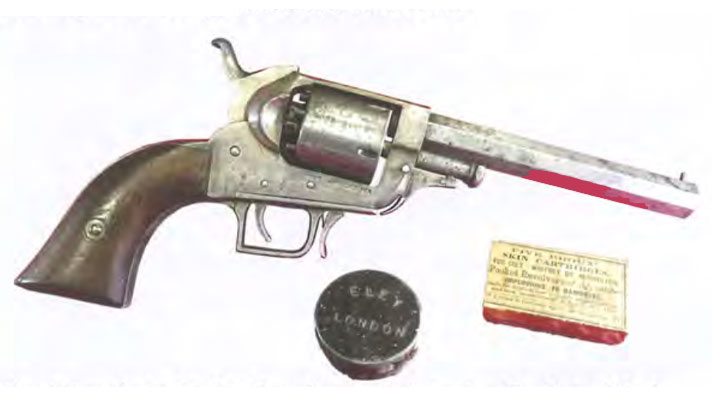
Rarity and Survival of the Whitney Percussion Revolvers
2020, Jeff Goodson and Philip Boulton
The Survival Files series analyzes the rarity and survival of American percussion revolvers. It’s based on the database of British antique arms collector Philip Boulton, who has recorded serial numbers on over 85,000 percussion revolvers since 1970. Survival Files #3 analyzes data on the nine models of percussion revolvers produced by Eli Whitney, Jr. from 1850–1867. It discusses the history of the guns, refines their previously published production estimates, and calculates for the first time the known survival rates (KSRs) for the last three models that Whitney manufactured—the Navy, Pocket and New Model pocket or “Root” revolver. It examines how closely the known survival rates of these three models approximate their true survival rates, and discusses the major factors affecting their survival.
The Survival Files #4:
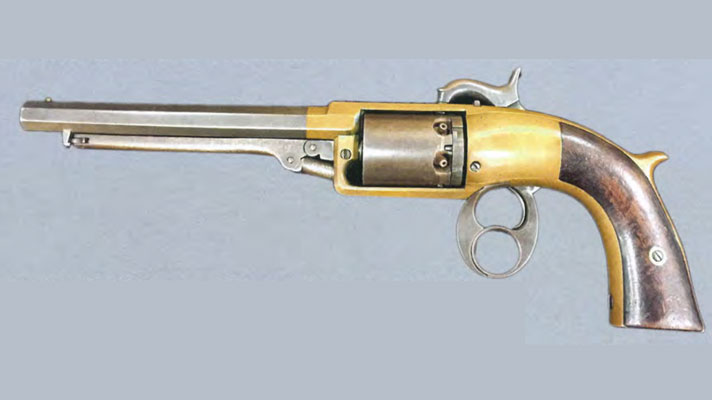
Rarity and Survival of the North & Savage, Savage, and Alsop Percussion Revolvers
2020, Jeff Goodson and Philip Boulton
The Survival Files series analyzes the rarity and survival of American percussion revolvers. It’s based on the database of British antique arms collector Philip Boulton, who has recorded serial numbers on over 85,000 percussion revolvers since 1970. Survival Files #4 analyzes data on the eight models of percussion revolvers produced by North & Savage, the Savage Revolving Firearms Company, and C.R. Alsop. It discusses the history of the guns, refines their previously published production estimates, and calculates for the first time their known survival rates (KSRs). It examines how closely their known survival rates approximate their true survival rates, estimates how many guns remain unrecorded, and discusses the major factors affecting the survival of the guns.
The Survival Files #5:
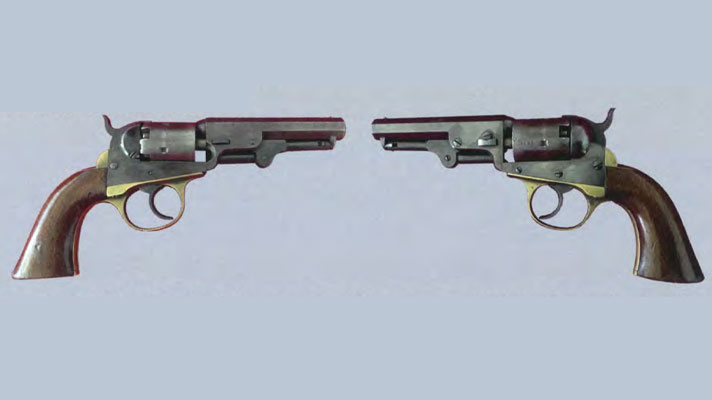
History, Rarity and Survival of the Cooper and Metropolitan Percussion Revolvers
2021, Jeff Goodson and Philip Boulton
The Survival Files series analyzes the rarity and survival of American percussion revolvers. It’s based on the database of British antique arms collector Philip Boulton, who has recorded serial numbers on over 85,000 percussion revolvers since 1970. Survival Files #5 analyzes data on the percussion revolvers made by J.M. Cooper & Company and the Metropolitan Arms Company in the 1860s. It discusses the history of the guns, refines their previously published production estimates, and calculates for the first time their known survival rates (KSRs). It examines how closely their known survival rates approximate their true survival rates, estimates how many guns remain unrecorded, and discusses the major factors affecting the survival of the guns. The article includes a rack-up of production, Stability Index and survival rate data for 27 percussion revolvers analyzed in Survival Files #1-#5.
The Survival Files #6:
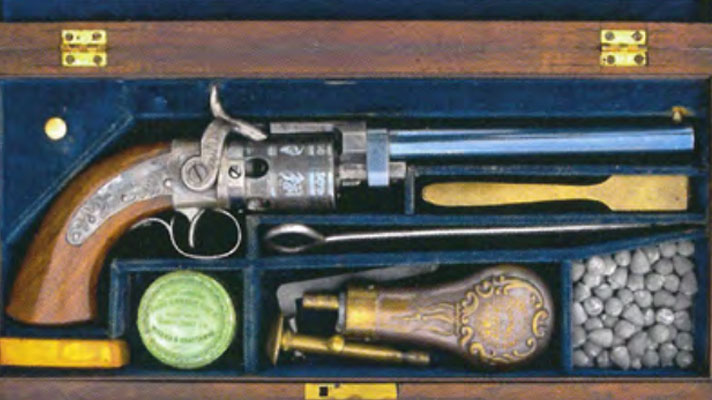
History, Rarity and Survival of the Manhattan and Massachusetts Arms Percussion Revolvers
2021, Jeff Goodson and Philip Boulton
The Survival Files series analyzes the rarity and survival of American percussion revolvers. It’s based on the database of British antique arms collector Philip Boulton, who has recorded serial numbers on over 85,000 percussion revolvers since 1970. Survival Files #6 analyzes data on the Pocket and Navy model percussion revolvers made by the Manhattan Fire Arms Manufacturing Company, and the Maynard-primed and Adams revolvers made by the Massachusetts Arms Company. It discusses the history of the guns, refines their previously published production estimates, and calculates for the first time their known survival rates (KSRs). It examines how closely their known survival rates approximate their true survival rates, estimates how many guns remain unrecorded, and discusses the major factors affecting the survival of the guns. The article includes a rack-up of production, Stability Index and known survival rate data for 36 percussion revolvers analyzed in Survival Files #1-#6.
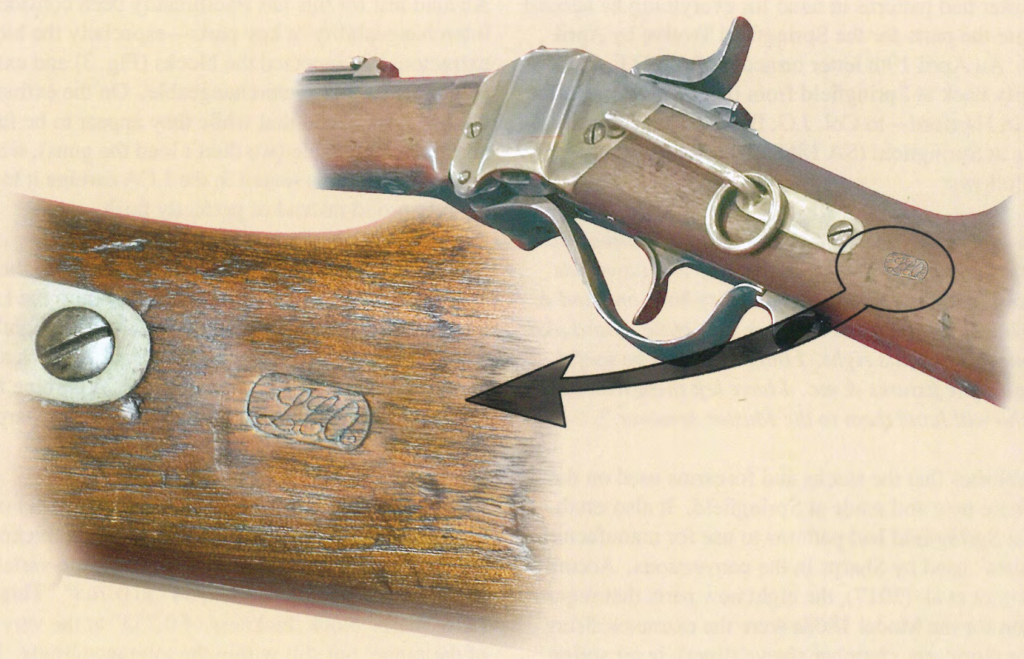
The Springfield Twelve. An Ultra-Rare Sharps Carbine Turns up at Gettysburg.
2022, Jeff Goodson and Al Duquette
After the Civil War, the U.S. Ordnance Department was faced with an enormous surplus of military carbines. Until a next-generation carbine could be developed for the cavalry troops that opened the west, it ordered the Sharps Rifle Manufacturing Company to convert over 31,000 Sharps carbines from .52 caliber percussion to .50-70 metallic cartridge. This was carried out from 1867-1869, with the guns immediately issued to cavalry regiments. To ensure that the U.S. government wasn’t being overcharged, in early 1868 Springfield Armory converted twelve guns internally and carefully kept track of the costs. That exercise was first identified by researcher Frank Sellers in 1975. None of those twelve carbines were ever found, however, until one turned up at Gettysburg in 2021. This article is a forensics deep dive into the Gettysburg gun, detailing how the authors proved that it was indeed one of the “Springfield Twelve” converted by the Springfield Armory. This article first appeared in The Sharps Collector Association Report, Volume 29, Number 1, 2022.
The photo shows the stock cartouche of Lucius C. Allin, foreman of Springfield Armory’s filing shop.
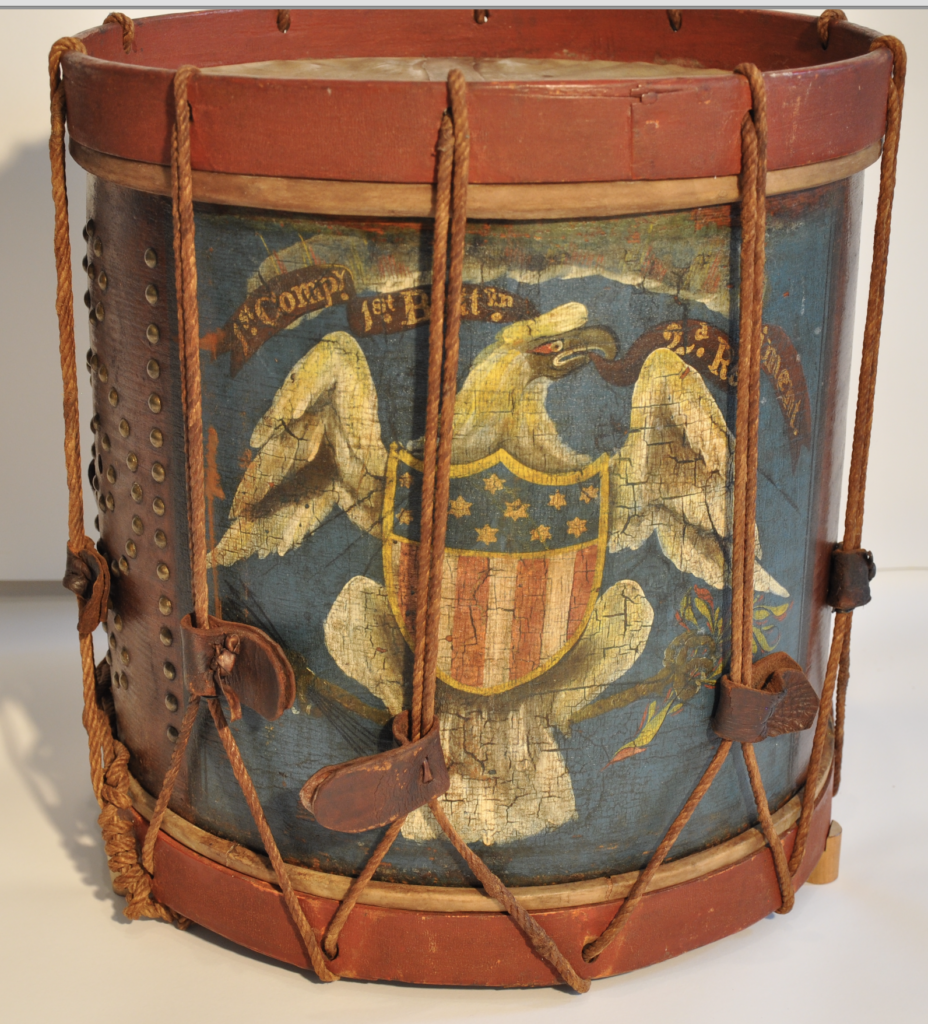
A Drum Beat Through History: Images and Information on Painted Military Drums During The “Golden Age” Of Painted Drums in North America.
August 2026, J. Craig Nannos
This is a brief article on the historical use of drums by cultures and societies for thousands of years. I have enclosed images and descriptions of drums used in North America from the Colonial period through the American Civil War. This, I believe, is the Golden Era of drum artwork. Enjoy the images presented and please note the information provided that hopefully will assist in the identification and the age of drums. Obviously those with labels or known tack designs can be easily identified, but the art or style of an eagle can be useful in determining the period and use of examples.
There are two links, the first to a PDF with images and the second with text.
The photo shows a US Regimental drum from the Federal period, made by Henry Fraley of Germantown, Pennsylvania.
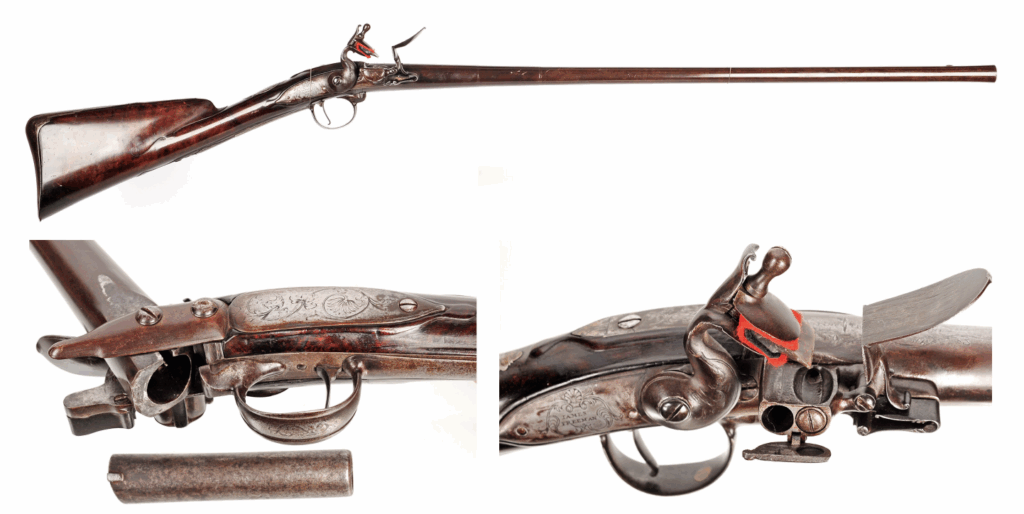
A Classification Of Early Breechloading Firearms (Until c. 1860)
August 2025, Matthew Schneiderman
This longterm project is based on firearms I’ve owned and seen, reading, thinking, and discussions. I would appreciate any comments, suggestions, additions, or corrections, and I welcome any questions. The trio of photos, by Dan Retting, shows an English flintlock reloadable-metallic-cartridge breechloading gun by James Paul Freeman, London, the 1720s. Note the priming-powder magazine. This gun is an example of Type 1A.
Collecting: An Annotated Bibliography
Dating, Terminology, And Conservation
August 2025, Matthew Schneiderman
My mentors, past and present, have and had a mastery of the history, details, and terminology of early English firearm construction. This allows dating based on a set of features carefully observed during the analysis of a piece. The brutal truth: I’ve never been able to reliably master this, despite decades of collecting. I have constructed this list in order to compensate, based on firearms I’ve seen and discussion with experts. As with all the research projects I’ve posted here, this one is ongoing. I welcome additions, corrections, comments, suggestions, and questions.
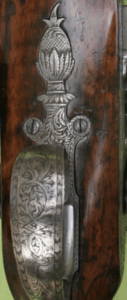
The photo shows the pineapple-shaped trigger guard finial of a flintlock pistol. Most experience and expert opinion dates the change from acorn to pineapple to 1785, but I’ve seen a few examples from c.1790. See also the entry for “finial”.
Firearms Curiosa: An Annotated Bibliography
Firearms Curiosa are part of my core collecting interest: unusual systems and designs, or “armes insolite”. This bibliography is an active project, and I would appreciate any additions.
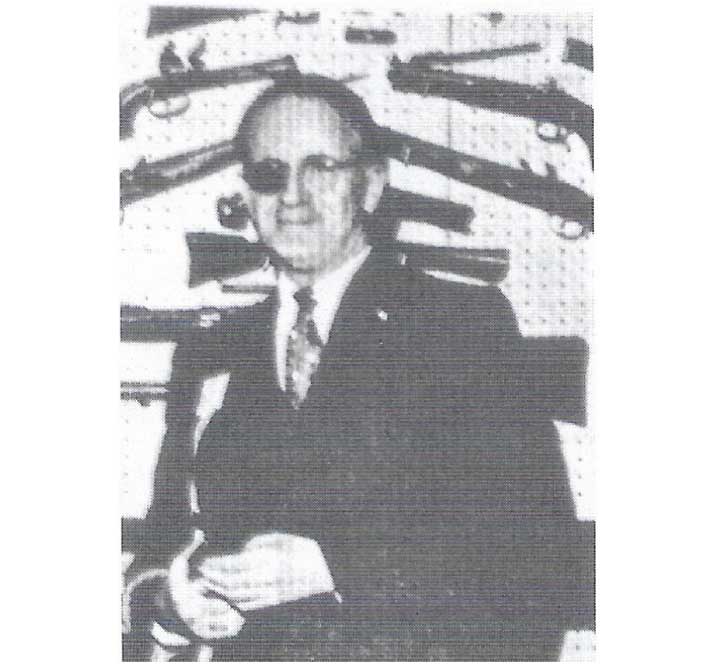
The photo is of Lewis Winant, from the American Society of Arms Collectors Bulletin #8, Fall 1963, the year of his death.

The List Of A Very Large Collection Purchased By Keith Neal In The 1930s
Here’s what I know about the Keith Neal list, starting with the introduction at the top. Mr. Hellyer of Herefordshire sold the collection to Neal, who (as an antique arms dealer) then sold most of it, keeping at very least a few locks. It’s possible Mr. Hellyer had died [a friend asked me if this was the case], but that would mean the grieving widow typed the list, so I assume it was a sale-while-alive. Later, Neal gave the list to Peter Scott-Edeson. Note that at the end of the list, it says “*lot numbers from Christie’s sale 18 July 2004”. This is a typo, not to be blamed on Mrs. Hellyer. The Christies Neal lock and odds-and-ends auction was on that date in 2002, so this version of the list was transcribed after that. In December 2005 Jim Gooding sent the list as you see it to John Burgoyne, with the greeting you see at the top, “What a wonderful Christmas Present,” which was correct. In January 2006, John sent the list to me and a few others in the early English firearms world. I think it’s highly likely, though not documented, that Jim Gooding got the list from Peter Scott-Edeson. I think that all collectors of English civilian flintlock and percussion firearms should have this list. I’ve owned two items on it, and I’ve seen at least two others.
The photo, taken by Craig Ross in September 1989, shows Keith Neal at age 83 in front of his home in Guernsey, one of the English Channel Islands.
An Introduction To Serial Numbers On 18th And 19th Century English, Irish, And Scottish Civilian Firearms.
This piece of research started as an assignment from Ben Nicholson for his book CLOCKWORK BASILISK THE EARLY REVOLVERS OF ELISHA COLLIER & ARTEMAS WHEELER. Which gunmakers used serial numbers, when did each one’s numbering begin, and what literature exists? This consultation work fit well with a much larger project I’d already begun: the collecting of serial numbers for multiple English gunmakers and gunmaking families. I’m currently tracking seven of them, and that work will appear here on the ASAC website soon. As always, I welcome additions, corrections, and questions.
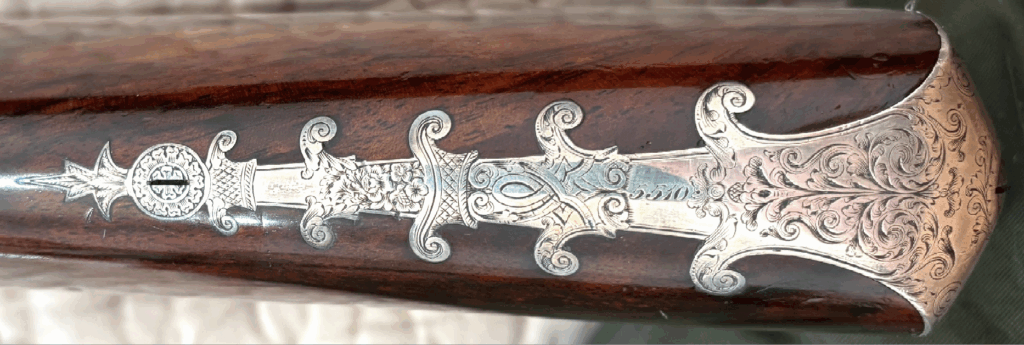
The photo shows the elaborate butt tang of a silver-mounted imperial-cap double rifle by Samuel & Charles Smith, serial number 5510, made in 1846.
William Smith And Samuel & Charles Smith Serial Numbers And Flintlock Patent Tracking Numbers.
All research flourishes with networking and collegiality. As you’ll see, I’ve recorded a lot of Smith family serial numbers. Many come from a group of Smith collectors who own guns by William, Samuel, and Charles, trade notes about them, and shoot them. These are extremely well-made tools that continue to function well. This is a particularly active project because Smith family firearms appear frequently in the antique arms collecting world. Please send me serial numbers and details for examples not listed here.
The second link within the second “Download Research Report” rectangle presents a listing of ranges of Smith family serial numbers for each year of production. There are no surviving company shop records, so these are (good) rounded-off approximations based on interpolation between datable firearms. Feel free to contact me for discussion.
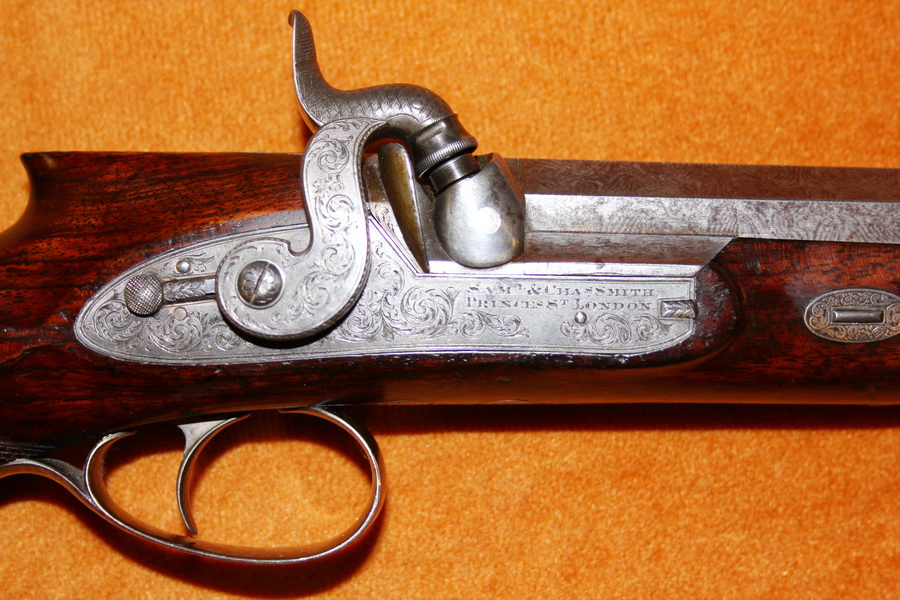
The photo shows the lock of one of a pair of imperial cap target pistols by Samuel & Charles Smith, serial number 6228 made in 1855. The pair has silver touches (you can see the barrel slide escutcheon plate) and unusual mini-sawhandles.
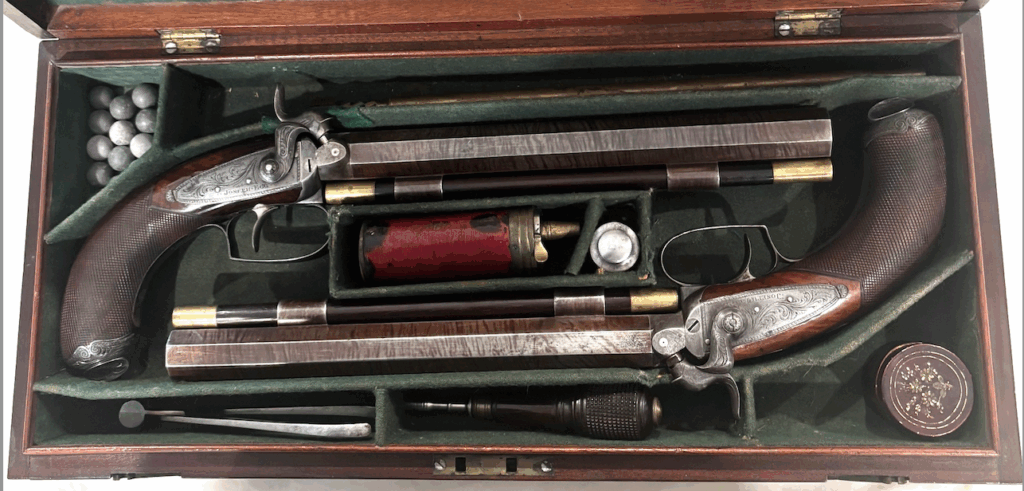
Serial Numbers for Joseph Egg, Tatham & Egg, Henry Tatham, and Joseph Egg Descendants.
October 2025, Matthew Schneiderman
At present I don’t know any other collectors who are researching the Joseph Egg family’s serial numbers. I would appreciate help with this project—please email me numbers not on this list. (As with all of these projects, my email address is at the end.)
The photo shows a cased pair of Joseph Egg percussion target pistols of unusual form, #2893, circa 1825. Note the “skull-crusher” butts. A friend who owned and fired these pistols decades ago says they performed very well.
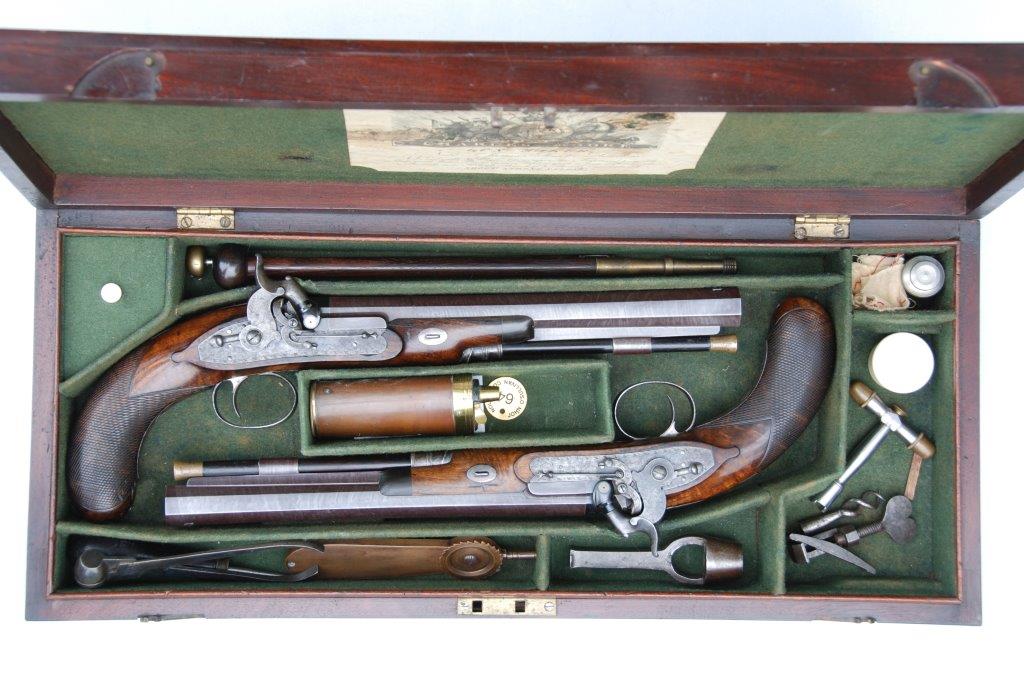
Serial Numbers of Firearms And Pill Dispensers By Charles Moore
October 2025, Matthew Schneiderman
In addition to the Smith family collectors mentioned previously, I’m in touch with and appreciate the help of a group of dedicated Charles Moore collectors. Moore firearms and pill dispensers have different serial number series, since all the firearms, with different ignition systems, were numbered consecutively but the dispensers, accompanying pill locks only, were numbered separately. As with all these projects, I welcome numbers, information, questions, and discussion.
The photo shows a cased set of “pellet-lock” (pill ignition) dueling pistols, #1225. I’m not yet able to estimate years of production because I’ve not seen enough datable firearms. See the reference for discussion.
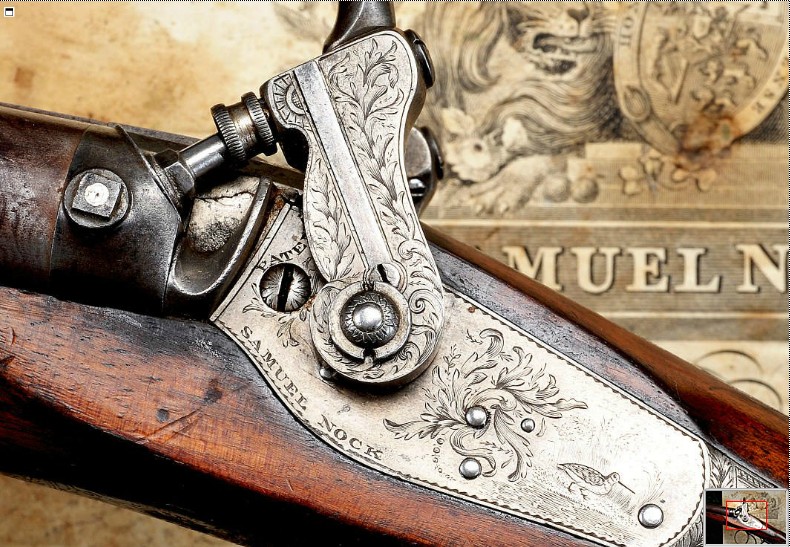
Samuel Nock Serial Numbers
October 2025, Matthew Schneiderman
This is a relatively new project. I’ve made some progress with Samuel Nock, but the list is still small and there are no individually-datable firearms. The only dating available is via Samuel’s address change in 1822-1823 and the change of Royal Pronoun in 1837. The sudden jump from three figures to the 6000s remains a mystery. Ideas or information about this gap and any new serial numbers would be welcome.
The photo shows one lockplate of patch-lock double gun #6859. “Patent” refers to the licensing of Matthew Wyatt’s grip safety. The patch sits in the removable hammer nose.
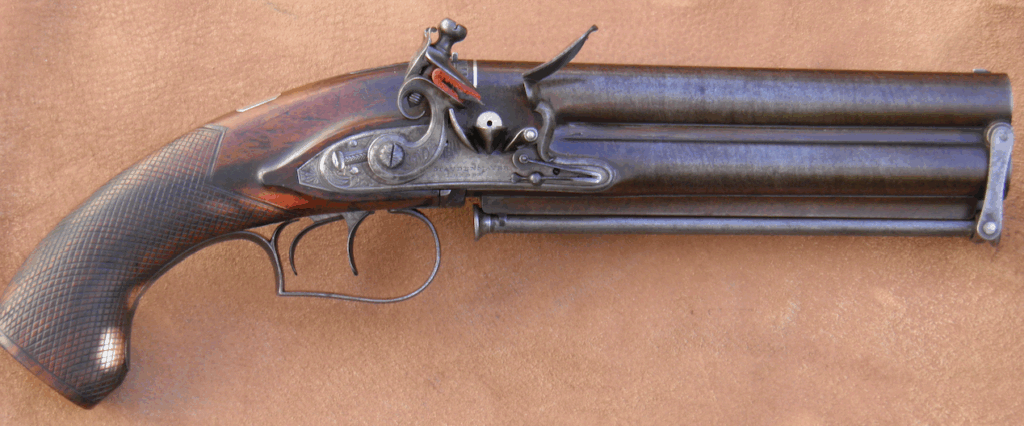
Samuel Staudenmayer Serial Numbers
October 2025, Matthew Schneiderman
Samuel Staudenmayer is one of the few English gunmakers for whom there is pre-existing serial number research and literature—I’ve included the references. I’ve expanded the list somewhat, and continue to welcome numbers new to me, comments, questions, and discussion. The photo shows a Staudenmayer flintlock over/under double-barrel pistol with a Catalan-style butt, a design he liked and produced in some quantity. #1378, made in 1812.
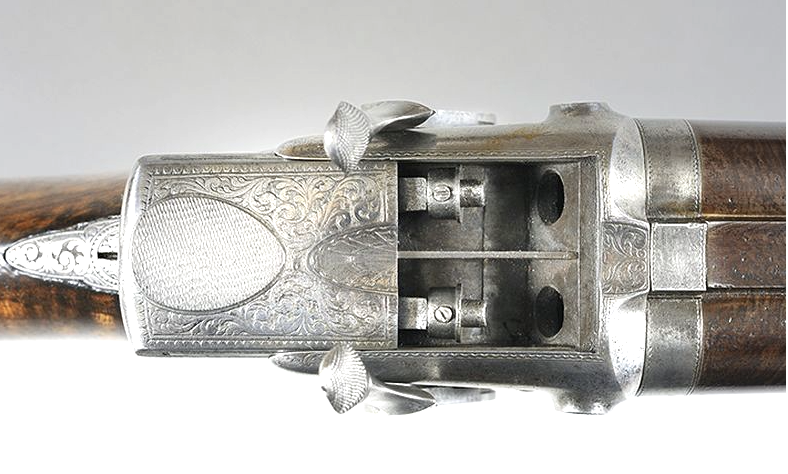
English Percussion Enclosed-Action Guns By Charles Jones, Birmingham and London: Their Serial Numbers And Nature
October 2025, Matthew Schneiderman
“Jones Guns” are rare, but fascinating and unusual. I’ve found 21 of them so far, but I’m sure there are more survivors—get in touch if you’ve seen one I haven’t recorded, have questions, or want to discuss. This posting has some background, details, images, and the transcription of a fun historical document. The photo shows the open action of a typical Charles Jones double gun. Note the hammers shaped to hold the patent hammer caps, the out-of-sight very short nipples (for striking only, not for holding a cap), the open sliding action cover, and the external cocking levers.
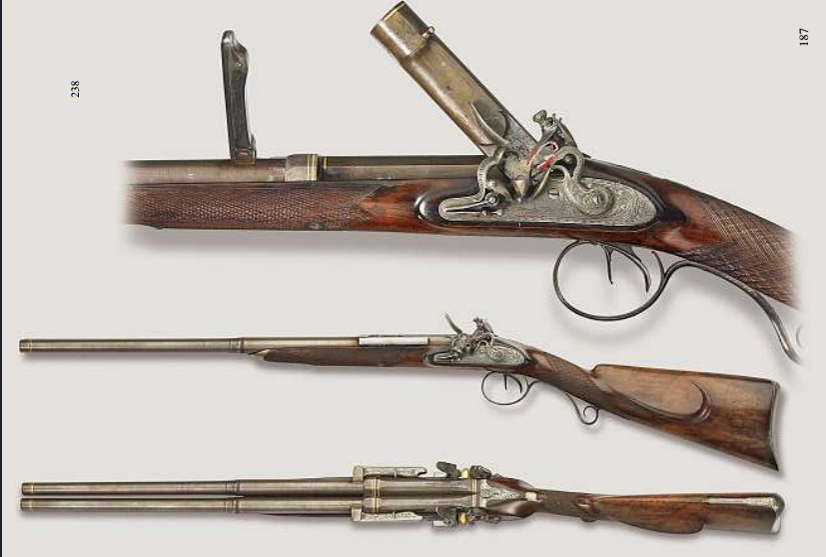
Serial Numbers And A Listing Of Firearms Featuring The Urbanus Sartoris Breechloading System
October 2025, Matthew Schneiderman
Sartoris-patent firearms are very rare, but they offer the pleasure of a strange design and an entertaining, once- obscure back-story. See my JAAS article, referenced in the link! I do very occasionally discover new ones, and I’d like to learn of any not on my list. The serial numbers appear only on guns and rifles made by Anthony Farindon Biven, Sartoris’ gunmaker from 1822 to 1825. Others, named and unnamed, used the Sartoris system, but their works are not numbered. The Sartoris name never appears on firearms. So far there are no pistols. The photo shows a beautiful and profoundly rare Sartoris- system double gun. It doesn’t have a serial number, but I show the photo montage anyway, for your entertainment. The gun does have London proof and view marks and the barrel-maker’s mark WF of William Fullerd.
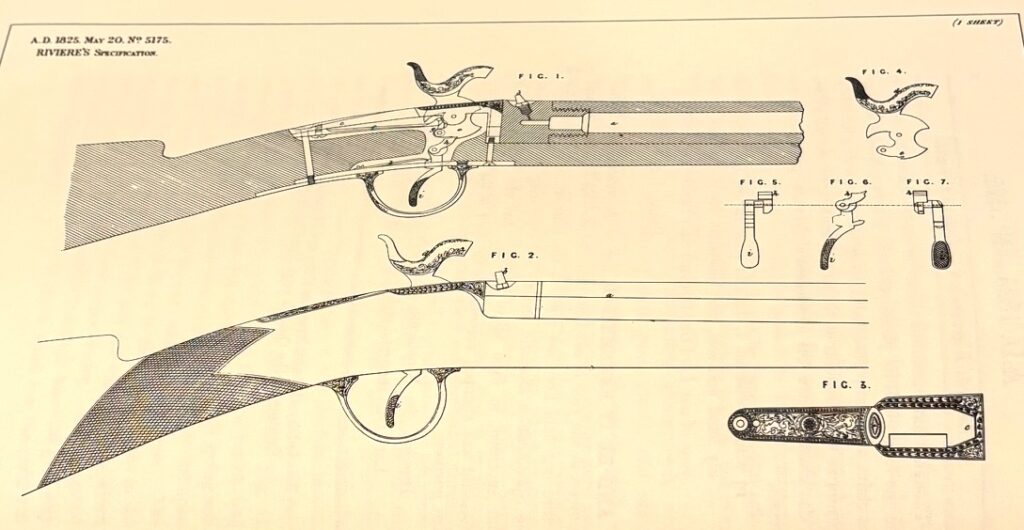
Isaac Riviere Patent-Tracking Numbers (Sometimes Referred To Erroneously As “Serial Numbers”), Plus Background Information
February 2026, Matthew Schneiderman
I discovered Isaac Riviere’s odd-looking firearms recently. As you’ll see, the numbers found on his work track what he made under his British patent for a box-lock action, #5175 of May 20, 1825. He advertised this as “…the guns without locks”, thus achieving relative immortality via paradox. Some other gunmakers used such patent-tracking numbers (e.g. the Smith family, detailed in a Research Report posted above). In Riviere’s case, all his other production is unnumbered—he didn’t use true serial numbers. Still, I thought tracking his tracking would be of interest to people who own Riviere firearms, to others who’ve heard of him, and even to some for whom he’s a new discovery. As always, please send me any numbers I haven’t listed.
The photo shows the set of drawings that accompany his patent.
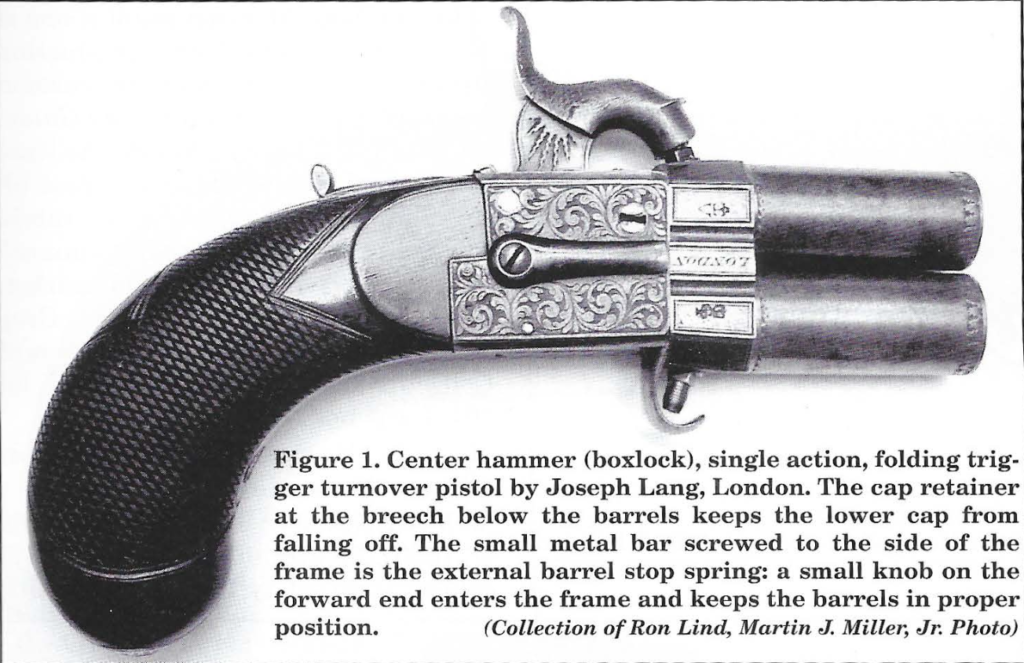
Collecting Percussion Turnover Pistols
2008, Matthew Schneiderman
Turnover pistols and longarms deliver two sequential shots via two over/under barrels. To fire the second shot, the barrel pair is literally turned over 180 degrees by hand to bring (for percussion) the second copper cap nipple under the hammer or in line with an internal striker. The accompanying image shows the form we almost always see. In 2006, via a combination of curiosity, rage for order, skill, and luck, I created a unique collection of percussion turnover pistols, ranging from the common to the hyper-rare, and organized a definitive turnover classification. I think this work deserves to survive longer than your usual “Gun Report” article, so I’ve placed it here. There’s a second link for the front cover and the last page.
The photo shows a fine, high quality, nicely-engraved turnover pistol by Joseph Lang, London, representing Schneiderman Type 1 (out of 11 types).
Superimposed-Load Flintock Pistols: Three Examples of 18th Century Technology
2017, Matthew Schneiderman and John Burgoyne
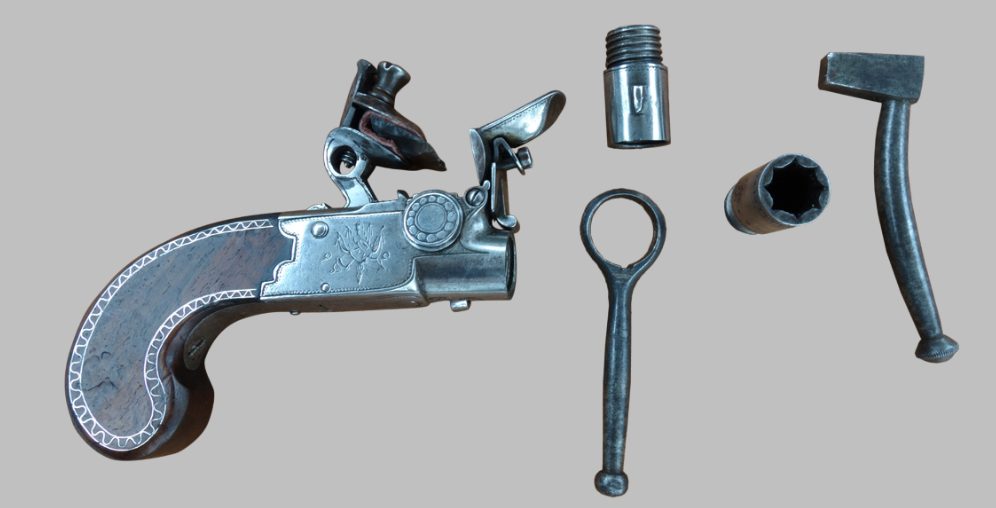
Superimposed-load firearms date from the 14th century, and from then until the early 19th they helped meet the need for multiple shots in strange and wonderful ways. “Superimposed” means more than one load of gunpowder and projectile in a single barrel. Examples come with one or multiple interconnected barrels, and they can fire in a fashion either controlled (the shooter decides when each shot is ignited) or uncontrolled (one ignition fires all the shots in turn). This article examines three ways of constructing superimposed-load controlled-action flintlock pistols in 18th century England. The reference is Arms Heritage Magazine [AHM] Volume 7, #4 (August 2017). The AHM archive is no longer available online.
The photo shows the Jarvis pistol, which fulfills its superimposed-load mission using a single barrel with two segments and a tap action to select the two shots. It’s the only type of turnoff pistol requiring two turnoff tools, one engaging the proximal segment’s barrel lug and the other fitting into the distal segment’s muzzle cut for a key.